



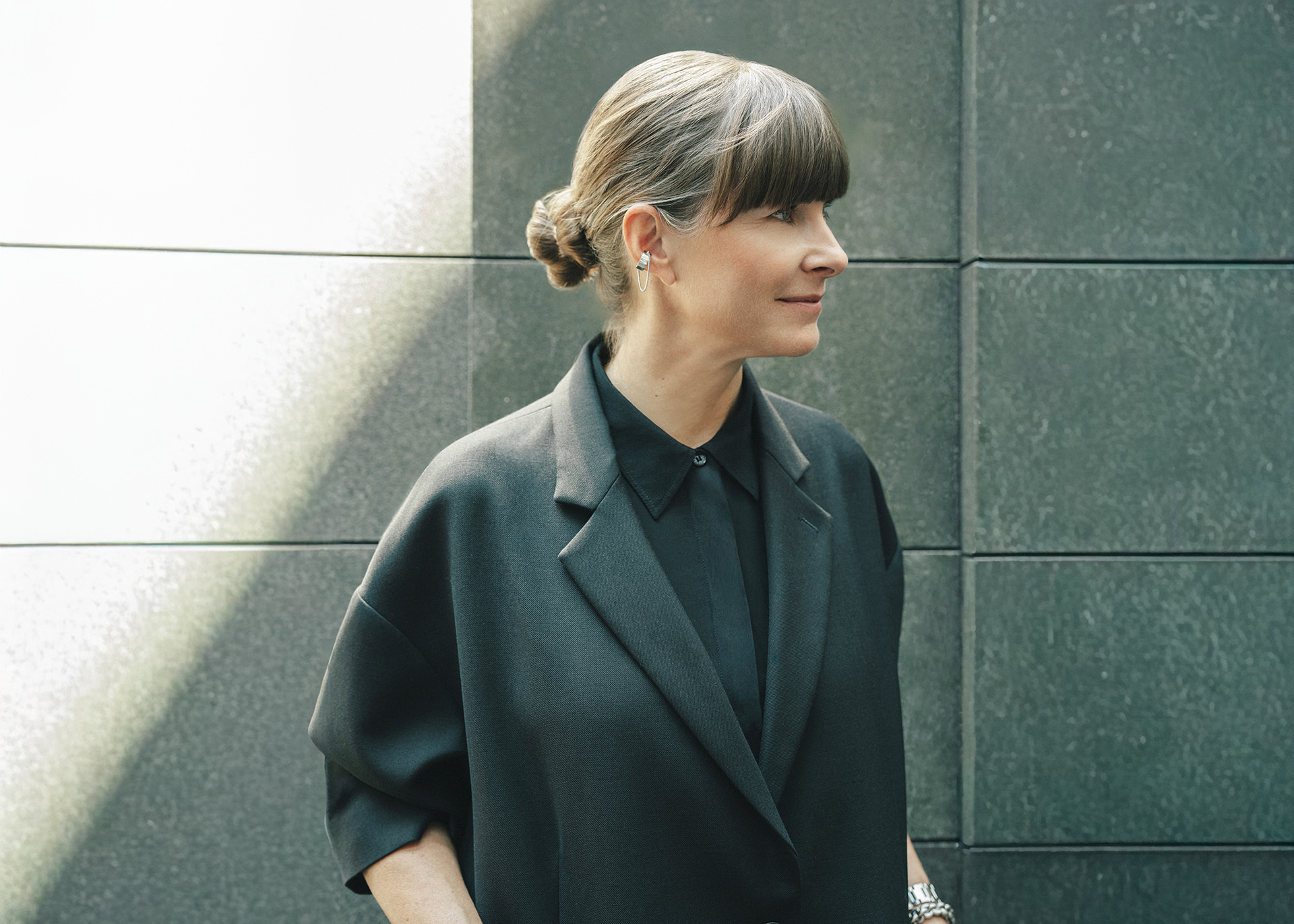
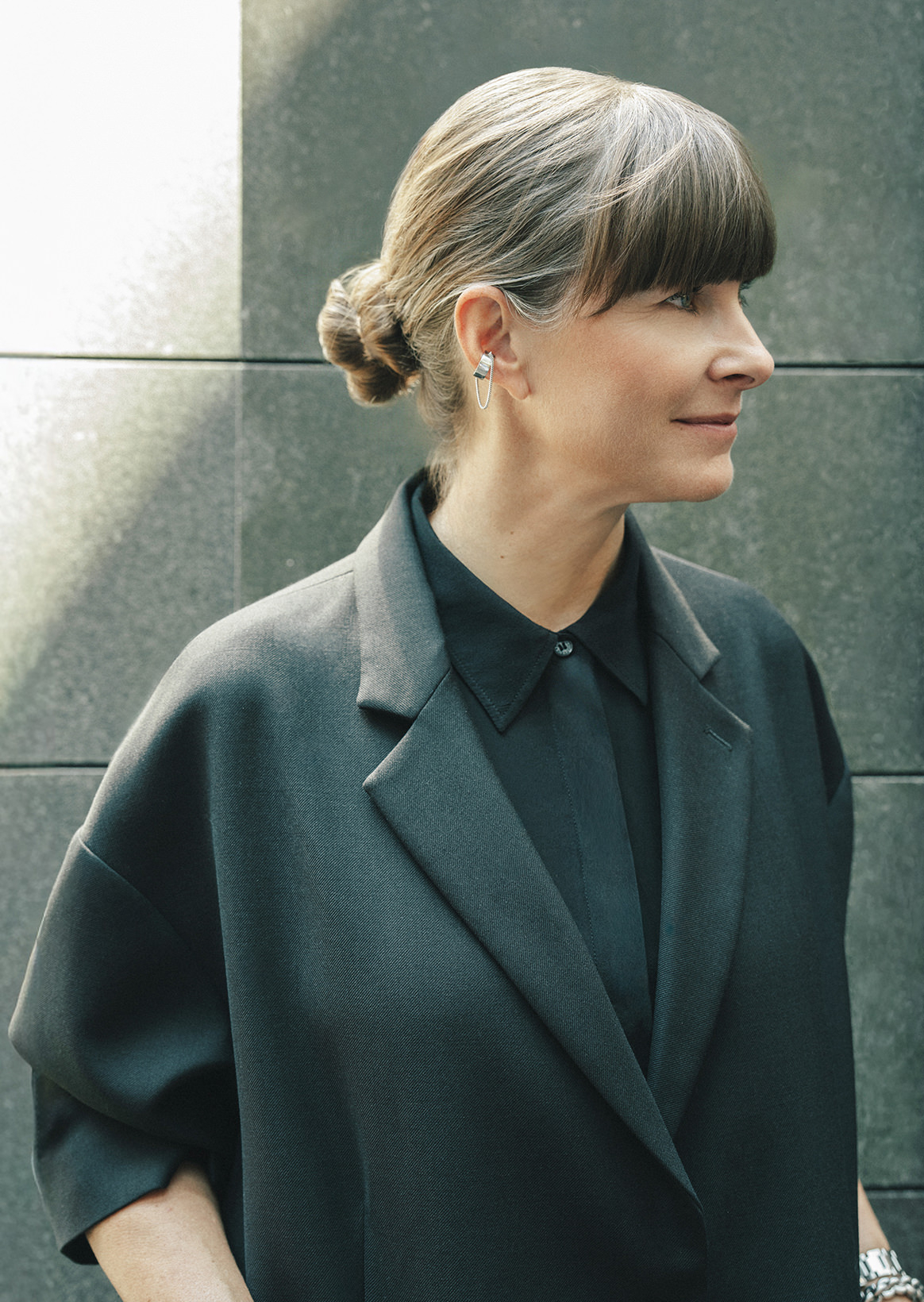
2013年,Mona Janssen和Morten Isacsen在挪威奧斯陸成立珠寶品牌Tom Wood (湯姆伍德) 。重新詮釋了Signature戒指的靜謐外觀的珠寶,兼具不受流行左右的普遍性與襯托佩戴者自身輪廓的強度。從創業之初就將“長久保存的製造”作為品牌哲學的核心,近年來透過材料採購的透明性和可追溯性的強化,將其思想推廣到更具體的實踐中。6月12日 (星期五),大阪首家直營店在心齋橋PARCO開業。同時舉辦的展覽會「A Journey in Craft」,不僅是成品珠寶,背後的材料研究和工匠們的手工製作也成為焦點。來到日本的共同創辦人Mona Janssen談到了創造力的起源、對日本工藝的共鳴,以及隨著時間的推移而加深意義的製造。
※The English version is available below.
- Photo
- Natsumi Ito
- Text
- Tomoko Ogawa
- Edit
- RIDE Inc.
——您曾多次提到大自然和建築的影響,回顧過去,您認為自己的原創性和創造力是在怎樣的環境中培養出來的?
在挪威西海岸,被海、森林、岩石山包圍的非常小的島上長大。我們的家是200年前的麵包店,牆壁很薄,所以我們聽著大海的聲音入睡,被大海的聲音吵醒。一出門就聞到海的味道。當我還是個孩子的時候,沒有電話和網路,我總是在戶外玩耍,為動物建造一個小花園,並用大自然中的東西創造一些東西。就像這樣,大自然一直在我身邊,形成了對形狀,質感和材料的看法,我認為這導致了重視簡約的感覺。
離開島嶼並接觸到廣闊的世界後,我開始被建築所吸引。我很快就迷上了小細節、比例和結構如何培養我對事物的感覺。我的父母都是老師,但我的媽媽經常帶我去看展覽、舞台和表演,我在一個非常有創意的家庭長大。與其說是一個環境,我認為這些不同的影響和持續觀察和學習的興趣結合在一起,培養了我的創造力。直到今天,我仍然在大自然與人類之間的對話中找到靈感-文化、歷史和工藝所塑造的東西。
——在學習了經濟學和品牌策略領域的職業生涯之後,您創立了Tom Wood,那是什麼讓您邁出了這一步?
與其說是一個決定性的瞬間,不如說是花時間一點一點培養實感的感覺。一開始很好奇,幾乎是興趣。我在品牌和行銷領域工作超過15年,其中6年是經營自己的經紀公司,我的職業生涯大部分時間都在幫助他人建立品牌。雖然我經常深入參與創意方面的工作,但在提供建議和制定策略方面,我並不是真正實現它的人。
最大的轉捩點是,在現在也一起工作的其中一間工廠,看到自己親手製作的第一個原型時。那是簽名戒指系列。當我看到它時,我對我的孩子有一種「這是我的東西」的感覺。對我來說,對自己的創造力產生的東西負責是一種新的體驗。這是因為創造自己的東西比建議別人更深刻,更個人化。經過1年左右的籌備,他於2013年離開經紀公司,轉而專注於Tom Wood。
——在至今為止的歷程中,有哪些話語和建議至今仍銘記在心?
保持好奇心。
——如果你可以對年輕時的自己說一句話,你會說什麼?
相信自己的直覺。這不是別人說的話,而是我自己提出的建議 (笑) 。我可能等了很久才開始使用Tom Wood。正因為如此,下定決心去做,就是那個教訓。人們可能會說「你錯了」或「你的選擇不正確」。但有時候我的直覺是正確的。力量來自內心,如果不相信自己,就很難持續下去。我打從心底覺得「做了真好」。

——做設計時,最重視的價值觀是什麼?
想要製作出可以長時間穿在身上的東西。我們不趕流行。相反,我們重視堅固的形狀,材料的質量和工藝。這樣一來,一個人就可以學到很多年,也許可以傳承到下一代。這一直是Tom Wood的基礎。不只是珠寶,不論是家具、服裝、藝術等,我對所有類別都很感興趣。設計、材質和工藝的品質,在所有方面對我來說都具有重大意義。
—您如何看待好的設計與美麗的設計之間的差異?
對我來說,美麗往往是表面的,但好的設計更深層。它更個人化,並且是為了長期使用而設計的。品質、耐用性、工藝等各方面的優勢。也就是說,美麗就像書中所說的封面一樣,但我認為好的設計是代表包含其中的手工藝品在內的一本書的整體。到達那裡的方法是保持簡單。簡單的東西很強。因為當你移除所有雜訊和多餘的東西時,剩下的只是最好的元素。材料可能是最強的元素,而形狀可能是最強的元素。當你拉它時,所有的東西都會暴露出來,所以它必須是真正好的,才能使它本身成立和純潔。加太多的話,大概就會變成隱藏著什麼。當你削減一切後,剩下的就是你應該留在那裡的東西,你值得永遠留在那裡。我相信在誠實和約束中創造。不是不斷創造新的產品,而是讓自己挑戰復甦某種形式,或是從極少的元素創造出新的東西。它現在很美,而且50年後也很美。

對你來說,什麼才是真正持久的?
即使經過時間的流逝,仍然保有意義和存在的意義-精心製作,精心設計,不是一個季節就能取代的東西,而是自然地融入一個人的生活。當一件事是無時無刻的,它會持續存在數年或數十年。在那個時候,它變得有價值。因為一個人一直擁有它,回憶就會堆積在那裡。追流行的話,無論如何都會想要一個接一個的新東西。但是,如果你遇到了對你來說真正有意義的東西——無論是穿在身上、用在身上,還是只是看著它,都會讓你感到舒服,它就會永遠留在你身邊。我認為正是那樣的東西,才是無時無刻的。
我也覺得我們的和平,有確實的認同感。Tom Wood永遠不會掩蓋你的個性。因為它純粹而簡單,反而可以加強你的身份。就像一個重點,或一個不經意的細節,讓你變得更「你」。也許它會讓我感覺更強大,就像我第一次戴上那個簽名戒指一樣。對我來說,無時無刻就是創造出足夠誠實的東西,讓我想要一次又一次地回頭。
——您發現傷口和老化有什麼價值?
我不喜歡丟東西,是想用到磨損光滑的人。今天穿的這件下裝,也是穿了12年或13年的。對我來說傷口不是問題。傷痕意味著它已經穿在身上,有人喜歡它並且使用它很多。人生中受到傷害是理所當然的,傷害會成為回憶。因為珠寶不是用來在盒子裡保持原樣的,而是用來戴在身上的。隨著時間的推移,這些痕跡成為故事的一部分,賦予事物新的韻味。
——如果你有任何特別意義的東西,你已經持有並使用多年了,請告訴我。
成為我的婚禮樂團,復古的簽名戒指。Morten向我求婚的時候,戒指留到了最後還沒決定。我不想要那個從很久以前就被視為結婚象徵的華麗樂團 (笑) 。感覺就像裝飾一樣。如果和他結婚的話,自己就知道了,也沒有必要讓別人看到。所以我跟他說我不需要戒指。然後他在抽屜裡找到一些舊的銀色簽名戒指,並問我:「這個怎麼樣?」。在那之前沒有意識到Signature Ring,也沒特別感受到緣分,但覺得很棒。完全看不出是婚禮樂團,反而像是只有兩個人的同款戒指,感覺就像是屬於只有我們的秘密團體。我將其中一個調整到我的手指,並在上面的平面上刻上結婚日期,就像一個秘密密碼。
我記得每當我戴上它時,我就有一種難以置信的強大感覺。這是一枚非常沉重的戒指,當時我的其他珠寶都很輕薄,所以當我忘記戴上它時,它的重量足以讓我意識到它的缺席。那是,我真的很喜歡的,第一個珠寶。


——在心齋橋PARCO開設了西日本的首個據點,您覺得這個地方有什麼可能性呢?
長年以來,大阪對我們來說是非常重要的城市,也是許多人認識品牌的地方。正因為如此,能在這裡擁有自己的空間,我感到有很大的意義,也有總算實現的想法。為了找到真正合適的場所,我和PARCO的各位進行了3年左右的對話。那個過程本身也非常好,正因如此,更加期待這家店的開店。
對我們來說,這是一個與我們的社群建立更近距離的聯繫的機會,並提供更個人化的品牌體驗。在大阪,人們感到開放的空氣和放鬆的舒適感,這是這個城市的魅力之一。在這樣的氣氛中品牌會如何被接受,非常期待。對於PARCO來說,如果能成為帶來新的對比和價值的存在就好了。


——在「A Journey in Craft」展覽會上,不僅展示了珠寶的成品,還展示了珠寶背後的工藝和材料。請說明你為什麼要公開這些平常看不到的面向?
我一直很想做的,就是要好好展現手工藝本身。很多人都不知道我們的拼圖是手工製作的。即使看到完成的一件,可能也不會去想它是怎麼製造出來的。我自己,還記得第一次造訪工廠時,看到製造的所有工序一個一個的時候。我真的很驚訝。我想創造一個機會,讓所有專注於一塊的工作,以及所有參與其中的人都能注意到。這麼小的東西,卻有這麼多人在做。當一個人知道它是如何被製造出來的,他就會更加珍惜它,並且更加享受它。作為一個品牌,
我們希望在製造過程中提供全面的透明度,從材料採購到成品。因此,我們希望在這個展覽中展示的不僅僅是完成的珠寶,還有背後的思考-材料的研究,手部的身體動作,以及決定我們製作什麼的每一個判斷。—Tom Wood長期致力於永續發展,他相信自己有責任為伊利產業帶來有意義的改變。
。在持續追求工藝與創新的同時,將理念付諸實踐的最大挑戰是什麼?我們最大的挑戰是確保寶石的可追溯性
。石頭的價值非常高,而且經過多次的人手,所以從礦場或採石場到完成的一塊,要追溯它的來源是非常困難的。如果你想要100%誠實地處理每一個流程,你必須回溯鏈條,讓每一個供應商都能看到資訊,甚至是更遠的供應商。但是,他們也有不希望那樣的時候。因為隱密性本身就是他們的商業模式。正因為如此,我們不能直接接受現在存在的「理所當然的真相」,而必須自己重新詢問,自己動手去尋找供應商。我們親手進行那個作業。從第一層、第二層、第三層一點一滴地往前走,只要持續足夠的時間,就會到達礦山。在那裡,我會與實際工作的人交談,並與他們對話,讓他們在旅程的每個階段都能一起努力。最困難的是
建立一個狀態,完全追溯到生產石頭的礦場和採石場,並在大規模上實現它。這需要大量的時間和精力,有時成本超過回報。即使如此我們還是會繼續。因為那對我們來說有更深的意義。在我們的努力中,我們最引以為傲的是我們的認證。在這個時代,這是少數能證明我們是以正確的方式工作的證據。如果不是那樣的話,就只會說說而已。——有與日本文化和審美觀共鳴的部分嗎?沒錯。特別是人們
。即使我們來自世界不同的地方,我們也深深地同情日本人凝視工藝和文化的目光,以及想要了解更多和接觸其背景的純粹興趣。我從以前開始,就對日本的工藝、品質和長期使用抱有敬意。對材料有誠摯的敬意,對製作有深思熟慮的態度。這些是我們Tom Wood共同的價值觀。我們相信,我們創造的東西能夠長久保留、使用,並隨著時間的推移變得更加個人化和有意義。當我在日本時,我總是得到能量,當我離開日本時,我覺得我變成了一個更好的人。——請告訴我們,近年來在日本,有哪些人給你留下了特別深刻的印象,或者發生了什麼啟發你創作的事?最重要的是,創造
的人-專注的工匠和藝術家,以及每次造訪都會遇到的誠實和熱情的人。
特別是在時代的潮流中,
在幾乎被遺忘的領域中,至今仍持續動手的工匠們深深地感動了。他們以驚人的熱情堅持著,那種姿勢總是帶給我強烈的刺激。它會激勵你做出更好的東西,更注重細節。在東京,每到一處必去的陶瓷器店和畫廊都有,在益子參觀古老的窯爐,接觸到數百年前的製造痕跡。在京都
拜訪了歷經數代的和紙燈籠製作工坊Kojima Shoten,他們的作品也在青山的店裡販售。此外還有玻璃作家、木工作家、從事家具製作的人們等,有很多的相遇。日本人無論做什麼都很細緻,細節也很周到。這種態度與我自己的審美觀和Tom Wood的製造哲學有著深刻的重疊。持續學習、持續觀察,對我來說有點上癮 (笑) 。

In 2013, the jewellery brand Tom Wood was founded in Oslo, Norway, by Mona Jensen and Morten Isachsen. Reinterpreting the signet ring into quietly understated pieces, its jewellery holds both a timelessness that stays free of passing trends and a strength that draws out the wearer's own presence. From the beginning, a commitment to making things that last has been at the core of the brand's philosophy, and in recent years it has pushed that thinking into more concrete practice through greater transparency and traceability in how its materials are sourced. On Friday, June 12, the brand's first directly operated store in Osaka opened at Shinsaibashi PARCO. Held alongside the opening, the exhibition A Journey in Craft turned its focus not only to the finished jewellery but to the material studies and the craftsmen's handwork behind it. We spoke with co-founder Mona Jensen, in Japan for the occasion, about the origins of her creativity, her resonance with Japanese craftsmanship, and a way of making whose meaning deepens as time accumulates.
—— You have often spoken about drawing inspiration from nature and architecture. Looking back, what kind of environment do you think nurtured your originality and creativity?
I grew up on a very small island on the west coast of Norway, surrounded by the ocean, forest, and rocky mountains. Our house was a 200-year-old former bakery with very thin walls, so I fell asleep and woke up to the sound of the ocean, and the moment you stepped outside you could smell it too. We had no phones or internet, so as a child I was always playing outside, building little gardens for animals and making things out of whatever nature gave me. That constant presence of nature shaped the way I see form, texture, and materials, and taught me to appreciate simplicity.
Architecture came a little later, once I moved out into the wider world; I quickly became fascinated by how small details, proportions, and structures shape the way we experience things. My mother often took me to exhibitions and performances, so I grew up in a very creative home, even though my parents were teachers. More than any single environment, it was the combination of these influences, together with a constant interest in observing and learning, that nurtured my creativity. I still find inspiration in the dialogue between nature and the man-made—shaped by culture, history, and craftsmanship.
—— After studying economics and building a career in brand strategy, you founded Tom Wood as a platform for expressing your creativity. Was there a particular moment that encouraged you to take that leap?
It was less one defining moment than a growing realization over time. At first it was closer to curiosity, almost a hobby. After more than fifteen years in branding and marketing, including six years running my own agency, I had spent much of my career helping others build their brands—often deeply involved on the creative side, but advising and building strategy rather than executing it myself.
The real turning point came when I saw the first test samples I'd made at one of the factories we still work with today. It was a group of signet rings, and the moment I saw them I had that instant feeling—the way you do with your own child—that this was mine. What was new for me was daring to be responsible for the outcome of my own creativity, because showing your creativity is much deeper and more personal than advising. After about a year of planning, I left my agency in 2013 and dedicated myself fully to Tom Wood.
—— Is there a piece of advice or a remark that has stayed with you throughout your journey?
Be curious.
—— If you could give one piece of advice to your younger self, what would it be?
Stick to your guts—believe in yourself. That's my own advice, not something handed to me. Maybe I waited a very long time before I finally did something like Tom Wood, and the lesson is to dare to do it. People will often tell you you're wrong, but sometimes you know better. The strength comes from inside, and I'm very glad I trusted it.
—— What values matter most to you when designing?
I want to make things that can last—pieces I won't get tired of and can wear for a long, long time. We don't chase trends. Instead, we focus on strong forms, quality in materials, and craftsmanship, so a piece can be worn for years and maybe passed on to a new generation. That has always been the foundation of Tom Wood. And it isn't only jewellery—I care about that whole dimension across every category: furniture, clothing, art.
—— What distinguishes good design from something that is simply beautiful?
For me, beautiful can be only surface, whereas good design is deeper, more personal, and made to last—strength in every aspect: quality, longevity, craftsmanship. Beautiful is the cover; good design is the whole book, including the craft inside.
The way I reach that is by keeping things simple. Simple is strong, because once you remove all the noise, what's left are the best components—sometimes the material, sometimes the shape. When you take things away, everything shows, so a piece has to be truly good to stand on its own; if you add a lot, you're usually hiding something. And once you've taken everything away, what remains is what deserves to be there—what deserves to stay forever. I challenge myself to reignite a shape, or to create something from very few elements, in such a way that it will be beautiful now and still beautiful fifty years from now.
—— What does “timelessness” mean to you personally?
A truly enduring object is one that stays relevant and meaningful over time—well made, thoughtfully designed, and a natural part of someone's life rather than something replaced after a season. If you chase trends you tend to need a lot; but if you find things that genuinely mean something, that you can wear or use or simply look at and still feel good, then it's timeless.
I also think our pieces have a lot of identity without overshadowing the person. Tom Wood doesn't cover you—it's pure and simple, so instead it can strengthen your identity, like an accent that makes you more you, and maybe makes you feel more powerful, the way I felt when I first wore that signet ring. Timelessness, for me, is creating something with enough integrity that you keep coming back to it.
—— What do wear, scratches, and signs of age mean to you?
I don't like to throw things away, and I like to wear things until they're worn smooth—the trousers I have on today are twelve or thirteen years old. To me, scratches don't matter; they mean a piece has been worn and loved. Jewellery isn't meant to stay untouched in a box—it's meant to be worn, and over time those marks become part of the story and give a piece character.
—— Is there an object you have kept and used for many years that holds a special meaning for you?
Yes—the vintage signet ring that became my wedding band. When Morten proposed, our rings were the last thing we figured out, mainly because I didn't want the delicate band traditionally associated with weddings; to me that almost felt like decoration. So I told him we didn't need rings at all. Then he found a couple of old silver signet rings in his drawer. They didn't look like wedding bands at all—more like matching rings for the two of us, as if we belonged to our own secret group. We resized one to fit my finger and engraved the tabletop with our wedding date, like a secret code.
I remember feeling incredibly powerful whenever I wore it. It was very heavy, and at a time when my other jewellery was thin and light, that weight meant that if I forgot to put it on, I noticed its absence. It was the first piece of jewellery I ever truly got attached to.
—— As Tom Wood opened its first West Japan store at Shinsaibashi PARCO, what possibilities do you see in this new place?
Osaka has been an important city for us for many years, and a place where many people have come to know the brand. That’s why opening our own space here feels very meaningful to us — and, in many ways, long overdue. We’ve been in dialogue with PARCO for around three years to find the right place, and it’s been a very good process, which makes me even more excited about this opening.
For me, it’s an opportunity to connect more closely with our community and offer a more personal experience of the brand. There’s also something about Osaka itself — the openness of the people, and the slightly more relaxed atmosphere — that feels very special. I think that openness is part of what makes this city so attractive, and I’m excited to see how the brand will be received in that environment. Hopefully, we can bring something new to PARCO as well — a different kind of contrast, and something valuable.
—— A Journey in Craft, presented alongside the opening, shined a light not only on the finished jewellery but on the processes and material considerations behind it. What made you want to reveal these often unseen aspects of the creative process?
It's something I've wanted to do for a long time—to actually show the craftsmanship. A lot of people don't realize our pieces are handmade; when you look at a finished piece, you may not think about how it was made. I remember the first time I visited the factories and witnessed every single step of production—I was amazed. I want to help people realize all the dedicated work that goes into a single piece, and all the people involved: such a small object, yet so many hands make it. If you understand how something is made, you can care about it more and enjoy it more.
As a brand, we want to offer full transparency into the production process, from sourcing to the finished piece. So rather than just presenting the finished jewellery, we wanted the exhibition to show the thinking behind it: the material studies, the physical gestures, the decisions that define what we create.
—— Tom Wood has long embraced sustainability with the belief that it has a responsibility to drive meaningful change within the jewellery industry. What do you see as the greatest challenge in putting that philosophy into practice today?
Our greatest challenge is securing the traceability of our gemstones. They're highly valuable and switch hands so frequently that verifying their origin, all the way from the mine or the quarry to the finished piece, is extremely difficult. To be one hundred percent honest about every step, you have to go back through the chain and ask each supplier to open up and show you their own source—and sometimes they don't want to, because that secrecy is their business model.
So instead of simply accepting what is presented as truth, we have to question it and find those sources ourselves. That’s the work we do. We go layer by layer, and if we stay with it long enough, we eventually reach the mine itself, speaking directly with the people doing the work and building trust along the way. The hardest part is getting the stones traceable all the way down to the mine or the quarry they came from, and doing it at scale.
It takes enormous time and effort, and we do it even when it costs more than it returns, because it has a deeper meaning for us. What I'm proudest of are our certifications, because today they're the only real proof that you do things right—otherwise it's just something you say.
—— Are there aspects of Japanese culture or aesthetics that resonate with the philosophy of Tom Wood?
Yes, absolutely—above all, the people. Even though we come from different parts of the world, I relate deeply to the way Japanese people look at craft and culture, and to their genuine interest in going deeper into a story. I have always admired the Japanese appreciation for craftsmanship, quality, and longevity—a real respect for materials and a thoughtful approach to making things. Those are values we share at Tom Wood: we believe in creating pieces made to last, which become more personal and meaningful through use and time. Being in Japan always gives me energy, and I feel I'm a better person when I leave.
—— In recent years, have there been any experiences or encounters in Japan that left a strong impression on you or inspired your creative process?
Above all, it’s the people — dedicated craftsmen, artists, and the warm, sincere people I meet every time I visit. I’m especially moved by those who continue working in fields that may be slowly disappearing, yet still approach their craft with such passion. That leaves a deep impression on me and pushes me to make better things and pay closer attention to detail.
I’ve always admired the Japanese respect for craftsmanship, quality, and longevity — a real sensitivity to materials and a thoughtful way of making things. Those values are very close to what we believe at Tom Wood. There’s a precision and care in the way people approach everything here, and that’s something I deeply relate to.
I’ve visited many inspiring places over the years — ceramic shops and galleries in Tokyo, old kilns in Mashiko still run by families across generations, glass artists working with incredibly delicate Japanese glass, and woodworkers whose pieces we’ve even brought into our Aoyama store. In Kyoto, I’ve also visited workshops that have been making washi lanterns for generations, and we carry some of those pieces as well. There are many more. For me, learning and seeing new things is almost an addiction.

Mona Jensen
Tom Wood是挪威珠寶品牌的創始人兼創意總監。2013年,他創立了Tom Wood,推出了一系列小型珠寶,以現代方式詮釋了歷史標誌戒指。以自然、歷史、雕刻和建築等藝術為靈感的設計是其特色。
Founder and Creative Director of the Norwegian jewellery brand Tom Wood.In 2013, she founded Tom Wood and introduced a small collection of jewellery that reinterpreted the historical signet ring in a contemporary way.Her designs are distinguished by their inspiration drawn from nature, history, and art such as sculpture and architecture.

- 商店名稱
- TomWood
- 樓層
- 2F
- 電話號碼
- 06-6226-8266
- 官方品牌網站
- https://www.tomwoodproject.com/jp_ja/
- @tomwood_project


